

In the first article of my Substack, which was about the Hebrew letter Alef (א) and its possible connection to the Hebrew word for ‘a god’ אל and to the concept of force, I briefly mentioned the hypothesis of primitive two-letter roots in Hebrew. Well, I got a pretty good feeling it’s going to come up again in future posts, so we might as well get it out of the way and dive into it more deeply now.
According to this theory, even though Hebrew roots typically consist of three letters, many if not most of them may have derived from more ancient roots consisting only of two letters, and third letter of the root was added later. I certainly ascribe some merit to this theory, and in the following text, I mean to demonstrate why that is.
Primal Hebrew Words
Before we dive into specific examples, it is worth noticing that just like in any other language, the primal and most basic words in Hebrew are very short and consist of one syllable only.
Take a look at these pairs of common words like כֵּן (ken – yes) and לֹא (lo – no), טוֹב (tov – good) and רָע (ra – bad), פֹּה (po – here) and שָׁם (sham – there), חָם (cham – hot) and קָר (qar – cold), יַשׂ (yesh – have) and אַין (ein – have not). There are also nature related words like הָר (har – mountain), יָם (yam – beach), גָּל (gal – wave), עֵץ (ets – tree), אֵשׁ (esh – fire), אוֹר (or – light) and צֵל (tsel – shadow).

We also got animals like פָּר (par) and שׁוֹר (shor) for bull, סוּס (sus – horse), עֵז (ez – goat), דָג (dag – fish), family members like אָב (av – father), אֵם (em – mother), בֵּן (ben – son), אָח (ach – brother), סָב (sav – grandfather) and דּוֹד (dod – uncle or loved one), and body parts such as רֹאשׁ (rosh – head), יָד (yad – hand), פֶּה (pe – mouth), לֵב (lev – heart), דָּם (dam - blood) and more.
Many basic verbs and prepositions are also monosyllabic, or at least very clearly started as such. For instance, the verbs זָז (zaz), זָע (za), מָשׁ (mash), נָע (na) and נָד (nad) – all indicating movement, and the verb נָח (nach) which means to rest. Other examples are the verbs חָי (chai – to be alive) and מֵת (met – die), the verb חָשׁ (chash – sense), the verb גָּר (gar – dwell), רָץ (rats – run), שָׁב (shav – return), and many more. On the preposition front we got the word עָל (al – on top), אֶל (el – towards), מְ or מִן (min – from), עַד (ad – until), בְּ (be – at / in), and even צָד (tsad – side).
There are more examples, but I think the point is clear.
Primal Two-Letter Roots
Sadly, the existence of some basic monosyllabic words, no matter how many there are, is simply not enough of to prove that primal Hebrew roots contained only two letters. To do that, we need to demonstrate something else – a process. We need to show how Hebrew shifted from a two-letter root system to a three-letter root system.
I first came across this idea a long time ago, in an old Israeli website called השפה העברית (The Hebrew Language). It has a section about the history of the language, and in it they briefly introduce this theory and give three sets of roots as possible evidence supporting it:
The roots פ-צ-ל (split), פ-צ-ח (crack), פ-צ-ע (wound) and פ-צ-צ (explode) – all relate to opening and breaking up into more pieces. They all may have stemmed from an ancient root in the form of פ-צ (Peh – Tsadi), which also exists in the verb פָּצָה (patsa) which is a dated way of saying ‘open’ like in the phrase פצה פיו (patsa piv) – opened his mouth.
The roots פ-ר-ד (separate), פ-ר-ז (exceed), פ-ר-ח (bloom, fly away), פ-ר-ט (elaborate), פ-ר-ך (crunch), פ-ר-מ (untie), פ-ר-ס (slice), פ-ר-ע (interrupt), פ-ר-צ (breach), פ-ר-ר (crumble), פ-ר-ק (disassemble) and פ-ר-ש (secrete) – all have something to do with taking something out of and away from something else. They all start with פ-ר (Peh – Resh) which is also associated with fruit (פרי) and procreation (פרו ורבו). We also have the root פ-ר-א which means wild or feral and refers to people separated from civilizations and things that breed uncontrollably.
The roots ק-צ-ב (pace, allocate), ק-צ-ה (edge, tip), ק-צ-ע (scrape, shave off), ק-צ-צ (chop) and ק-צ-ר (shorten) – all describe cutting and trimming the end of something, and may have derived from the root ק-צ (Qof – Tsadi) which also gives us the word קֵץ – end.
I remember how intrigued I was by this theory when I first read that online article. Ever since then I was always on the lookout for more roots that match this pattern, and every time I spotted one, I made sure to make a note of it. The list grew over time and what better place to share it than here.
One quick disclaimer before we dive in – I am not in any way shape or form a scholar of Ancient Hebrew, but rather just a native Hebrew speaker and a language enthusiast. All the roots I propose here are based on my knowledge of modern Hebrew and may have contained ancient letters or sound that do not exist in Hebrew today. Also, they may have been borrowed into Hebrew from other languages.
The roots ק-ט (cut), ג-ד (sever) and ג-ז (clip)
These three roots all convey some form cutting. The first one ק-ט (Qof – Tet) is clearly closely related to ק-צ (Qof – Tsadi), and the later two ג-ד (Gimel – Dalet) and ג-ז (Gimel – Zain) are possibly the result of some form of lenition they went through.
Let’s begin with the root ק-ט, which incidentally sound exactly like the word ‘cut’ in English. Here are some three letter roots that start with these two letters:
The root ק-ט-ע (Qof – Tet – Ayn) – relates to segmentations and also used to describe the act of cutting something abruptly.
The root ק-ט-מ (Qof – Tet – Mem) – to cut the head of a shape leaving only the base.
The root ק-ט-פ (Qof – Tet – Peh) – to pick fruit off a tree, or flowers of the ground.
The root ק-ט-ל (Qof – Tet – Lamed) – generally expresses lethality or ‘to kill’, but in the old expression קוטל קנים (qotel Qanim) it refers specifically to cutting reed canes.
Other roots with less obvious connection are:
The root ק-ט-ן (Qof – Tet – Nun) – small. Segments are smaller parts of the whole, and by cutting something we are making it smaller.
The root ק-ט-ב (Qof – Tet – Bet) – polarity. Not only does it relate to edges, but also in Aramaic it means to cut.
The root ק-ט-ט (Qof – Tet – Tet) – to fight, to quarrel, to brawl.
The root ק-ט-ר (Qof – Tet – Resh) – to burn incense.
As for the ancient root ג-ד, it is found in three three-letter roots with a clear sematic relation to the idea of cutting:
The root ג-ד-ע (Gimel – Dalet – Ayn) – to sever, to cut off.
The root ג-ד-ם (Gimel – Dalet – Mem) – to sever (a limb).
The root ג-ד-ר (Gimel – Dalet – Resh) – fence.
Another word worth taking into consideration is גָּדָה (gada) which means a riverbank, because when you think about it a bank is like a cut between water and land. It is also worth noting here that the tribe of Gad (גד) sat on the eastern bank of the River Jordan.
When nomadic people come to a riverbank, they usually stop and gather up until they figure out what to do. Perhaps that is how we got the root ג-ד-ד (Gimel – Dalet – Dalet) which means to gather. Other roots that might be related to this idea are:
The root ג-ד-ל (Gimel – Dalet – Lamed) – to grow, to get big, in increase in size.
The root ג-ד-ש (Gimel – Dalet – Shin) – to fill up and spill over the rim.
The last root in this group is ג-ד-ף (Gimel – Dalet – Peh) which means to curse or to use profanity. I really don’t have anything to say about it, except that it might be related to the root ח-צ-פ (Chet – Tsadi – Peh) – to be rude. More on that root later.
The final potential primal root in this group is ג-ז (Gimel – Zain). Here are its possible descendants:
The root ג-ז-ז (Gimel – Zain – Zain) – to cut hair or to shear wool.
The root ג-ז-ר (Gimel – Zain – Resh) – to cut, usually straight.
The root ג-ז-ם (Gimel – Zain – Mem) to cut branched off trees. Here it is worth noting that the Hebrew word for tree trunk גֶּזַע (geza) also starts with the same two letters.
Other then these three roots, we also have the root ג-ז-ל (Gimel – Zain – Lamed). While it does not refer to cutting, it does describe taking something that doesn’t belong to you from someone else by force.
The roots ח-צ (arrow), ח-ד (sharp), and ח-ט (tusk)
These three ancient roots are most likely related to each other not only semantically but also phonetically through the letters צ (Tsadi), ד (dalet) and ט (tet).
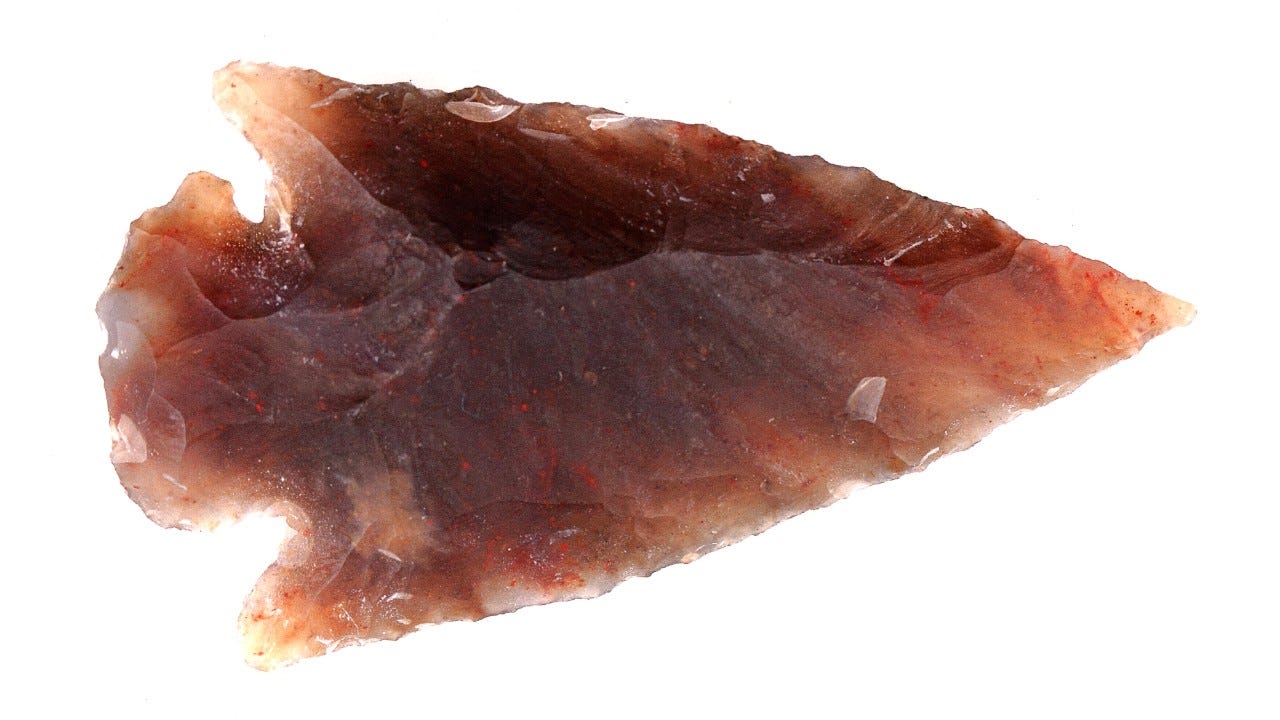
The root ח-צ gives us the Hebrew word for arrow חֵץ (chets). An arrow is a sharp object that cuts through the air, crossing a certain distance and then penetrates its target by splitting it open. Here are some more words that may have also derived from it.
The verb חָצַה (chatsa) – to cross or to cut in half
The word חֲצִי (chatsi) – half
The verb חָצַב (chatsav) – to chisel, to quarry, to dig using a pickaxe.
The verb חָצַץ (chatsats) – to buffer or stand in between
The word חוּץ (chuts) – out, exterior
The word חָצֵר (chatser) – yard or court (located outside)
Note that one of the most famous Hebrew words חֻצְפָּה (chutspa) is also based on a root that start with ח-צ. It describes rudeness, brazenness and insolent behavior which some might associate with a sharp object like a thorn.
Speaking of sharp, let’s move on to the root ח-ד from which we get the word חַד (chad), meaning sharp. Here are other interesting words related to it:
The verb חִדֵד (chided) – to sharpen
The verb חָד (chad) and the noun חִדָה (chida) – riddle
The verb חָדַר (chadar) – to penetrate
The noun חֵדֶק (chedeq) – originally referring to thorny plants and now refers to the trunk of an elephant or insects’ proboscis. Possibly a portmanteau of חד (sharp) and דק (thin / minute).
There are two more roots that also start with ח-ד, but connecting them to the idea of sharpness is more of a stretch:
The root ח-ד-ש (Chet – Dalet – Shin) indicating ‘new’. A new arrowhead or blade is still sharp.
The root ח-ד-ל (Chet – Dalet – Lamed) which means ‘to cease’ or ‘to stop abruptly’, signifying a sharp change from action to inaction.
Moving on to the root ח-ט (Chet – Tet) from which we get the word חָט (chat) meaning tusk. Here are more related roots and words:
The root ח-ט-ט giving us the verb חִטֵט (chitet) – to poke, and the noun מַחַט (machat) – niddle.
The verb חָטַב (chatav) – to chop wood or cut down trees. Note the resemblance to חָצַב (chatsav) – to chisel.
The noun חֹטֶם (chotem) – a dated way of saying nose.
The noun חֹטֶר (choter) – a tree branch or a sharp stick. Today also refers to a rifle cleaning rod.
The noun חוּט (chut) – a thread or a wire.
Two more words with less clear relation are:
The verb חָטַף (chataf) – to snatch, to kidnap. One could argue it describes a quick and sharp movement or that it requires penetrating some kind of defense. Also, notice the resemblance to ח-צ-ף (rude).
The root ח-ט-א which is associated with missing the target, committing a sin, and sanitization. We have discussed this root more deeply here:

The root ע-ק (stressing and straining)
The primal root ע-ק (Ayn – Qof) can be found in the Biblical Hebrew word עָָקָה (aqa) and its Aramaic counterpart עָקָא (aqa) meaning trouble, problem or a tight spot. Later it became ע-ו-ק (Ayn – Vav – Qof) and gave us the modern word מוּעָקָה (Mu’aqa) meaning mental stress. When you encounter a problem, you need to go around it, and if there’s too much pressure things might bend. Maybe that’s why many Hebrew roots that start with ע-ק have something to do with bends and curves:
The root ע-ק-ם (Ayn – Qof – Mem) – bent, crooked, with curvature (usually in a negative connotation).
The root ע-ק-ל (Ayn – Qof – Lamed) – bent or curved but in a neutral / positive connotation or a natural way. Note the relation to the root ע-ג-ל (Ayn – Gimel – Lamed) – circle.
The root ע-ק-ף (Ayn – Qof – Peh) – to go round, bypass or circumvent.
The root ע-ק-ב (Ayn – Qof – Bet) – referring to the heel, the curved part of the foot.
The root ע-ק-ש (Ayn – Qof – Shin) – In biblical Hebrew it means bent and twisted, not straight. In modern Hebrew it took on the meaning of stubborn – a person who doesn’t follow a long or cannot change his ways.
Other roots that start with ע-ק but are not as strongly related are:
The root ע-ק-ר (Ayn – Qof – Resh) – to pull something out completely, to uproot, to make sterile. Note that many times both these actions require bending and twisting.
The root ע-ק-ץ (Ayn – Qof – Tsadi) – to sting. Though a sting does create a bump on the skin, this root might also derive from the root ק-צ (tip / edge) we mentioned earlier and therefore related to the word קוֹץ (qots – thorn).
The root ע-ק-ד (Ayn – Qof – Dalet) – This rare root means to tie or to bind and is mostly known from the Bible and the story of the Binding of Isaac. Whether we are talking about the rope, or referring to the person or animal being bound – this action also requires a lot of bending and twisting.
The root ח-ש (sense)
The primal root ח-ש (Chet-Shin) is mostly associated with sensing. It gives us both the verb to sense חָשׁ (chash) and its corresponding noun חוּשׁ (chush). Here are more roots that may have derived from it:
The root ח-ש-ב (Chet – Shin – Bet) – to think, to consider or to calculate.
The root ח-ש-ד (Chet – Shin – Dalet) – to suspect, to have a hunch.
The root ח-ש-ק (Chet – Shin – Qof) – to desire. Note the similarity to the root ש-ק-ק (Shin – Qof – Qof) which also expresses desire and passion.
The root ח-ש-ש (Chet – Shin – Shin) – to fear, to be afraid
Three more roots which also starts with ח-ש but do not directly relate to sense are:
The root ח-ש-ך (Chet – Shin – Kaf) which signifies darkness – a phenomenon that does impact the senses.
The word חֹשֶׁן (choshen) – the ceremonial breastplate of the high priest in the Temple of Jerusalem.
The root ח-ש-ל (Chet – Shin – Lamed) – to forge and shape metal.
The root ד-ח (repel)
If there ever was a primitive root ד-ח (Dalet – Chet) in Hebrew, it didn’t not survive for long independently. However, the following verbs do make a pretty strong case for its past existence.
The verb דָּחַה (dacha) – to reject or to repel.
The verb דָּחַף (dachaf) – to push. Note the resemblance to the verb תָחַב (tachav) which means to push into a narrow space using a finger.
The verb דָּחַק (dachaq) – to press, to cram.
The verb דָּחַס (dachas) – to compress.
We also find ד-ח in the word דֹּחַן (dochan) meaning millet – a type of cereal usually given to animals and that people only eat when they are pressed for food, though this maybe simply related to דָּגָן – grain.
The root נ-ק (knock / nick / pierce)
Like the root ד-ח above, the primal root נ-ק also does not appear independently in Hebrew anymore. The closest word we have that carries that structure is נָקִיק (naqiq) which means a deep hole or long narrow gap between rocks like a ravine or a gorge. However, there are many three-letter roots that support its existence:
The root נ-ק-ב (Nun – Qof – Bet) – to pierce or to punch a hole.
The root נ-ק-ד (Nun – Qof – Dalet) – to mark with a dot.
The root נ-ק-ז (Nun – Qof – Zain) – to drain out liquids through a hole.
The root נ-ק-ר (Nun – Qof – Resh) – to peck, to knock with a beak (birds) or a striking pin (firearms). This root also gives us the word נִקְרָה (niqra) – grotto.
The root נ-ק-ש (Nun – Qof – Shin) – to knock, to hit in a percussive manner.
The root נ-ק-ף (Nun – Qof – Peh) – this root is associated with two meaning: the first is time periods and elapsing, and the second is to strike or beat down.
There are other roots that start with נ-ק but not are not as strongly linked to the meaning of piercing or striking:
The root נ-ק-ם (Nun – Qof – Mem) – to avenge or take revenge. Note the act itself is usually associated with weapons and blood.
The root נ-ק-ט (Nun – Qof – Tet) – to take measures or position, usually after careful consideration.
The root נ-ק-ה/י (Nun – Qof – Heh or Yod) – to clean.
The root נ-ק-ע (Nun – Qof – Ayn) – to sprain or dislocate. In this case the נ (Nun) might not even be part of the original root.
The root נ-ש (mouth actions)
The letter sequence נ-ש (Nun – Shin) starts many actions that involve the mouth:
The root נ-ש-ם (Nun – Shin – Mem) – breathing (and soul)
The root נ-ש-ף (Nun – Shin – Peh) – to exhale, to blow out air (living creatures)
The root נ-ש-ק (Nun – Shin – Qof) – to kiss (and weapon). Again, note the similarity to the root ש-ק-ק (Shin – Qof – Qof) which relates to passion and desire.
The root נ-ש-ך (Nun – Shin – Kaf) – to bite
The root נ-ש-ב (Nun – Shin – Bet) – to blow (mostly for wind – considered to be a variant of נ-ש-ף).
Other than these five, there are three more roots that starts with נ-ש, but they relate to shedding something off. It is possible that their ש (Shin) was originally another letter or a different sound.
The root נ-ש-ר (Nun – Shin – Resh) – to fall off (leaves from trees, teeth, hairs and so on).
The root נ-ש-ל (Nun – Shin – Lamed) – to shed of skin.
The root נ-ש-ה (Nun – Shin – Samekh) – to forget, to fall from memory.
The root ש-פ (lowering and cowering)
There are quite a few roots that start with ש-פ (Shin – Peh) and directly have something to do with the idea of ‘getting low’.
The root ש-פ-ף (Shin – Peh – Peh) – to lower one’s body, to crouch. The doubling of the last letter indicates that this is probably the earliest and simplest modification of ש-פ.
The root ש-פ-ל (Shin – Peh – Lamed) – meaning low, particularly in low tide (שֶׁפֶל) and lowlands (שְׁפֵלָה).
The root ש-פ-ך (Shin – Peh – Kaf) – estuary, to pour out, to spill, to dump. All indicating a movement towards a lower point.
The root ש-פ-ע (Shin – Peh – Ayn) – a slope or an incline. This root is also used to express abundance and plenty, perhaps because things naturally concentrate in lower places, particularly water which makes the land more fertile.
The root ש-פ-ן (Shin – Peh – Nun) – from the root we get the two animals. First is שָׁפָן (shafan – coney or hyrax) which is known to cower and hide between rocks, and the second is שְׁפִיפוֹן (shfifon) which is a type of snake – an animal also known for keeping its body on the ground. Another interesting word that contains this root is שִׁיפוֹן (shifon) which means rye – a type of grain that sort of bows down from the weight of its head.

Another possible related roots are ש-פ-ש-ף (Shin – Peh – Shin – Peh) and ש-י-ף (Shin – Yod – Peh) which mean to rub and to smooth down respectively. Other roots that start with ש-פ but don’t seem to have a clear relation to the idea of lowering down:
The root ש-פ-ט (Shin – Peh – Tet) – to judge.
The root ש-פ-ר (Shin – Peh – Resh) – benign, well and good, get better.
The root ש-פ-ד (Shin – Peh – Dalet) – to skewer.
The root ש-פ-י/ה (Shin – Peh – Yod or Heh) – to calm down, to feel well, to be sane.
More Examples
There are other examples of potential primal roots in Hebrew, but since this article already turned out to be much longer than planned, I will just mention them here briefly in one list. Also, in the interest of time I will only list the roots that share a sematic meaning.
Two relatives of the root פ-צ mentioned in the first examples are פ-ת-ח (open) and פ-ת-ר (solved). They may have gone through lenition to give us פ-ז-ר (disperse, spread out) and ב-ד-ר which nowadays means entertain but originally meant easing the mind and letting go of worries. From that we also get ב-ד-ח (joke).
The letters ר-ג may have something to do with emotion because we have ר-ג-ש (feel, emotion), ר-ג-ע (relax), ר-ג-ז (anger) and ר-ג-ן (upset).
The roots ח-ר-ש (plow), ח-ר-ץ (slot, groove), ח-ר-ט (notch, engrave), ח-ר-ך (small hole or crack) may all derive from ח-ר which means hole.
The root צ-ר (narrow) may have gave birth to צ-ר-ה (trouble), צ-ר-ר (enemy), צ-ר-ם (unpleasant to the ear), צ-ר-ד (hoarse), צ-ר-ח (scream), צ-ר-ב (acid or chemical burn), צ-ר-ף (goldsmith and metalwork).
Many root which relate to hit and damage start with פ-ג – the root פ-ג-ע (hit), פ-ג-ש (meet), פ-ג-ם (damage, flaw), פ-ג-ז (shell weapon), פ-ג-ר (dead body, slow), פ-ג-ל (unwanted due to a flaw), פ-ג-ג (expire, fade).
The primal root ר-פ may have something to do with weakness and staleness – ר-פ-ה and ר-פ-ף (weak, loose), ר-פ-ס (soft, flaccid), ר-פ-ד (padding), ר-פ-ט (worn out, tattered), ר-פ-א (ghost, heal), ר-פ-ק (lean down on, elbow).
The roots פ-ס-ע (stride), פ-ס-ח (pass over, lame), פ-ס-ק (open one’s leg, stop) all start with פ-ס and refer to the legs.
The root כ-ף (spoon, palm) may have given us the roots כ-פ-ף (bend), כ-פ-ה (to force or to bend to one’s will), כ-פ-ת (tie down), כ-פ-ל (multiply, note the similarity and relation to ק-פ-ל which means fold).
Conclusion
It is important to remember that the examples above are only a fragment of the words in Hebrew, and in many cases even they include words that do not comply with the rule we were trying to prove. Therefore, while there is a certain degree of truth to this theory at least for some roots, a shift from two-letter roots to three-letter roots didn’t by any means constitute a primary mechanism for the creation of words in ancient Hebrew.
At best, the only claim we can make is that such a mechanism may have existed in a prehistoric stage in the development of a language which wasn’t even Hebrew yet. And if indeed it existed, it was only for a moment in time before other mechanisms developed and took over.
Nonetheless, it is still a fascinating glimpse into one possible ultra-early stage in the process of human language development. “Possible” being the operative word here.